

March 4, 2025
In the high-ceilinged gymnasiums of Division III men’s volleyball (not counting the Barn at SVU), a tactical revolution is quietly unfolding. The serve—once viewed simply as the action that initiates play—has evolved into perhaps the most potent offensive weapon in the game. Across division 3, a fascinating transformation is taking place that’s redefining how the sport is played at this competitive level.
The Shifting Landscape
The emphasis on serving has increased dramatically in recent years. What was once considered merely a way to start the rally has become a strategic centerpiece for successful programs. This shift isn’t merely anecdotal—it’s backed by numbers that tell a compelling story of evolution.
Analysis of match statistics from the 2025 season compared to 2024 shows a 32% increase in service aces/set from the leading team across Division III men’s volleyball and 4.3% increase in aces/set overall. Meanwhile, receiving efficiency has dropped overall YOY from .936 to .934, demonstrating the growing difficulty teams face when handling increasingly sophisticated serves.
The Jump Serve Renaissance
While the jump serve has long been a staple at higher levels of volleyball, its widespread adoption in D3 men’s volleyball represents a significant tactical shift. Unlike previous generations where the jump serve was reserved for specialists, today’s D3 rosters often feature four or more players with this weapon in their arsenal.
What’s driving this change is a combination of improved physical training at the high school and club levels, along with a growing emphasis on serving as an offensive weapon rather than procedural skill. Players are arriving on campus with more developed vertical jumps and shoulder strength, making the jump serve a viable option for a broader range of athletes.
Strategic Specialization
Perhaps the most fascinating development in D3 men’s volleyball is the emergence of serving specialists—players who may not contribute significantly in other aspects of the game but who enter specifically for their serving prowess.
This specialization has introduced elements of strategic depth previously unseen at this level. The tactical deployment of these serving specialists often occurs at critical moments when the psychological impact of an ace or tough serve can shift momentum dramatically.
These moments represent the beautiful chess match that volleyball has become—where a single player can step to the line, take a deep breath, and change the entire complexion of a match with one perfectly executed serve.
The Short Serve Revival
While power serving has dominated the headlines, a countertrend has emerged in the form of the tactical short serve. As teams have adjusted their defensive formations to handle powerful jump serves, the short serve—landing just over the net in zones 2 or 4—has become increasingly effective.
This revival of what was once considered an outdated technique speaks to the cyclical nature of tactical evolution in volleyball. It’s a reminder that innovation doesn’t always mean moving forward—sometimes it means rediscovering approaches from the past and adapting them to the modern game.
Statistical analysis backs this up. Short serves resulting in direct points or out-of-system passes have increased by 12% since 2022, according to tracking data from D3 matches. In this tactical revival, we see the beautiful adaptability of the sport.
Technology’s Impact
The technological revolution hasn’t bypassed D3 volleyball. Programs increasingly leverage video analysis software and statistical tracking to identify opposing teams’ reception patterns and vulnerabilities.
This data-driven approach has transformed serving from an intuitive skill to a precisely calculated strategy. Teams now enter matches with specific serving plans for each rotation, targeting particular players and zones based on extensive analysis.
The accessibility of these technologies has created a more level playing field across Division III, allowing programs with smaller budgets to compete through tactical intelligence rather than raw resources—a testament to the democratizing power of volleyball’s analytical revolution.
The Float Serve Evolution
While the jump serve garners attention for its power, the modern float serve has undergone its own technical renaissance. Today’s float servers have developed techniques to create more unpredictable ball movement, resulting in what’s often called the “volleyball knuckleball.”
These serves can literally change direction twice mid-flight, creating moments of beautiful chaos that challenge even the most skilled passers. Achieving this level of serve control requires significant biomechanical understanding and countless hours of dedicated practice.
The persistence required to master these techniques embodies the spirit of D3 athletics—players driven not by scholarship money or professional aspirations but by pure love of the game and the desire for technical mastery.
Psychological Warfare
Beyond the physical aspects, serving has developed into a psychological weapon. Strategic serving can demoralize opponents, force timeouts, and disrupt offensive rhythms.

This psychological dimension has led teams to develop resilience training specifically for pass reception. Mental performance has become as important as physical skill, with players learning to maintain focus and confidence when targeted by opposing servers.
There’s something profoundly inspiring about watching a player who has been struggling with reception step up in a critical moment, take a deep breath, and deliver a perfect pass after being targeted repeatedly. These moments of mental fortitude represent the best of what collegiate athletics can teach.
The Future of Serving in D3
Looking ahead, the tactical evolution of serving in D3 men’s volleyball shows no signs of slowing. Programs are already experimenting with hybrid serving techniques that combine elements of jump and float serves. Meanwhile, defensive specialists are developing counter-strategies, creating a fascinating tactical arms race.
For players and fans of D3 men’s volleyball, this tactical evolution represents one of the most exciting developments in the sport’s recent history. The humble serve, once merely the start of a rally, has transformed into an art form that combines power, precision, strategy, and psychology—reshaping how the game is played at every level.
As we watch this evolution continue to unfold, we’re witnessing more than just tactical innovation—we’re seeing the beautiful adaptability of a sport that continues to evolve, surprise, and inspire at all levels of play.

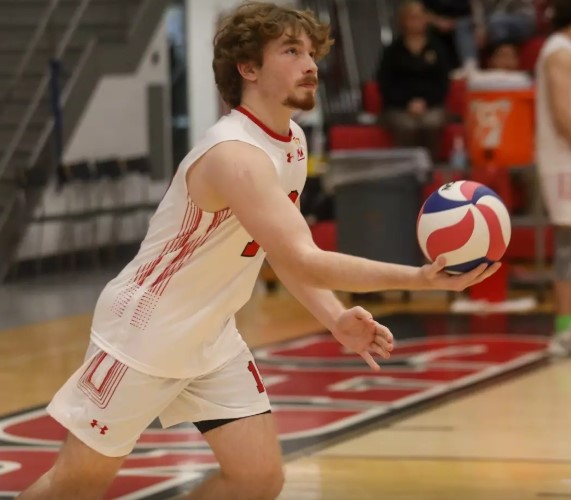
Here are some of the brilliant players making an impact on the service line for the 2025 season—


Comments and feedback welcome at insidehitter@gmail.com.