

February 4, 2026
Creating systems that maximize hitting percentage is one of the premium factors of team success. It is the biggest driver of winning and the ultimate barometer for positioning in the top echelon of national rankings. History proves this point with remarkable consistency.
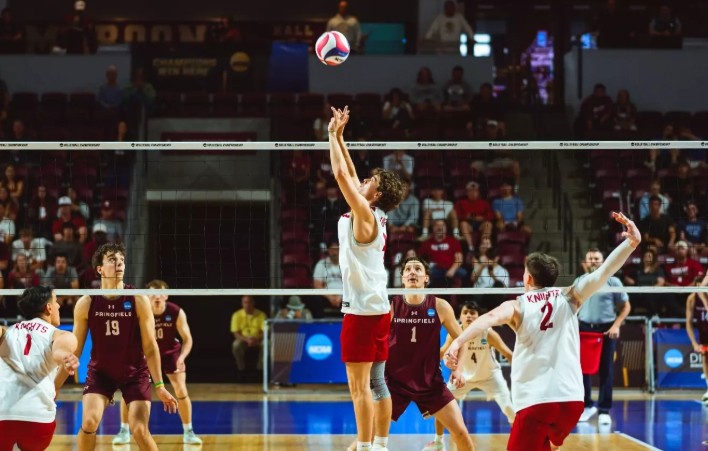
Look at the 2025 season. The two teams with hitting percentages far and away better than anyone else in the country were Southern Virginia (.360) and Springfield (.354). They met in the national championship match. That was not coincidence. Their efficiency numbers were off the scale, and they separated themselves from the field by converting swings into kills at rates no other program could sustain.

Beyond those two, only six other teams in the country maintained a hitting percentage greater than .300 across the full 2025 season: Loras, Carthage, NYU, Juniata, Messiah, and Stevens. All six finished as top-10 teams nationally. The correlation between efficiency and success is not subtle. It is definitive.
This reality frames the 2026 season with a simple question: which programs can sustain elite efficiency when April arrives?
The Early Season Landscape
Three weeks into the 2026 campaign, the efficiency leaderboard is taking shape. Southern Virginia has picked up exactly where it left off, currently pacing the nation at .392. MIT has emerged as a pleasant surprise at .352, while Carthage tracks at .345. These three programs occupy a tier of their own, hitting at rates that project to Final Four contention if maintained.
Ten additional programs have cleared the .300 threshold: Springfield (.332), Aurora (.332), Messiah (.312), Loras (.311), UC Santa Cruz (.309), Dominican (.308), Cal Lutheran (.308), Randolph-Macon (.306), Wisconsin Lutheran (.303), and Baldwin Wallace (.301).
Teams that maintain and excel in this area will eventually rise to the top by season’s end. This has been proven. The question becomes: who is engineering these numbers?
This is the ultimate measuring point for setters throughout the country. Can they orchestrate an attack that maximizes efficiency? Can they put their hitters in positions to terminate? Can they manage tempo, read blocks, and create advantageous matchups on a consistent basis?
InsideHitter wants to examine the setters who are creating these elite numbers and how they mesh with their attackers to build championship-caliber offenses.

The Statistical Stratosphere
Southern Virginia: Tolman and the Spread System
Southern Virginia University operates in a tier of its own, and junior setter Gehrig Tolman sits at the controls. Averaging 9.44 assists per set, Tolman orchestrates a spread system designed to create advantageous matchups at every position along the net.
What makes SVU’s attack so difficult to defend is the balance across its pins. Sophomore outside hitter Brady Dastrup leads the primary attackers with a .395 efficiency, forcing opposing blockers to commit early. That commitment creates space for sophomore right side Jason Wang, who is punishing defenses at a staggering .500 clip. When middle blockers must respect the outside threat, Wang feasts on one-on-one situations. Freshman outside Andrew Forese adds another dimension at .287.
Tolman’s genius lies in his ability to keep defenses guessing. No single option dominates the distribution, which means no single defensive scheme can shut down the Knights. The result is a .392 team hitting percentage that projects to another deep postseason run.
MIT: Zimmerman and the Freshman Revolution
MIT has emerged as perhaps the most pleasant surprise of the early season, sitting second nationally with a .352 team hitting percentage. The Engineers have entrusted their offense to freshman setter Colin Zimmerman, who has responded with 8.60 assists per set and a poise that belies his class standing.
What makes MIT’s situation remarkable is the youth surrounding Zimmerman. His top three attackers are all freshmen: outside hitters Lucas Toth (.331, 59 kills) and Jackson Garrett (.326, 42 kills), plus middle Matthew Louis, whose .544 hitting percentage leads all MIT attackers. The analytical program posted a .545 team hitting percentage in a single match earlier this year, a number that would be exceptional for a set, let alone an entire contest.
Zimmerman has found a particularly lethal connection with Louis in the middle. When the freshman setter goes to his freshman middle, good things happen at an elite rate. That chemistry, developed quickly, suggests MIT’s efficiency is sustainable rather than a small-sample anomaly.
Carthage: Morey and the Veteran Machine
Carthage College represents the opposite model from MIT. Senior setter Ryan Morey, standing 6’7″ with a veteran’s understanding of defensive tendencies, runs a system built around experienced attackers who know exactly what to expect.
Senior outside hitter Ryan Bartz leads the Firebirds with a .416 efficiency on high volume, providing the primary pressure point that forces defensive attention. Junior right side Jacob Heise adds .352 efficiency, ensuring the opposite pin remains dangerous. But it is sophomore middle Hudson Sweitzer who anchors the attack with a .557 hitting percentage, the highest among primary hitters at any of the 13 programs above .300.
Morey’s 7.88 assists per set is the lowest among the efficiency leaders, but that number reflects Carthage’s system rather than any limitation. The Firebirds run a controlled, deliberate offense that prioritizes quality over quantity. When Morey sets, his hitters terminate. The .345 team hitting percentage validates the approach.
The Championship Model
Springfield: Mulvaney and Middle-Out Philosophy
Springfield College remains the archetype of offensive consistency, tracking at .332 while deploying the philosophical approach that has made it the most decorated program in Division III history. Senior setter Dylan Mulvaney utilizes senior right side AJ Seveland as the primary pressure point, with Seveland hitting .390.
The Pride’s “middle-out” philosophy creates systematic advantages. When the middle blocker threatens, gaps open for pins like seniors Nathan Goh (.333) and Evan Costley (.230). Mulvaney’s 8.06 assists per set fuel a veteran-heavy attack where every hitter understands their role within the larger system.
Springfield’s ability to remain among the efficiency leaders year after year, across coaching staffs and recruiting cycles, speaks to institutional commitment to a proven model.
Aurora: Brouwer and Transition Excellence
Aurora University matches Springfield’s .332 mark while operating as one of the NACC’s most dangerous transition teams. Senior setter Logan Brouwer facilitates a balanced system where senior outside hitter Josh McLellan leads the team with 67 kills at a .348 clip, while junior SJ Nelson provides complementary pin production at .236.
Senior middle Ammar Brzovic’s .500 efficiency ensures that any defensive lapse in the middle results in immediate damage. Brouwer’s 8.13 assists per set keep the Spartans running at tempo, creating the chaos that transition-heavy offenses require to succeed.
The Rising Powers
Loras: Dziadkowiec and the Double-Middle Threat
Loras College has climbed into elite efficiency territory at .311, with sophomore setter Evan Dziadkowiec emerging as one of the nation’s most productive distributors at 10.77 assists per set. That volume reflects the Duhawks’ commitment to running their offense through the middle of the court.
Junior Roman Rothermel hits .460 while senior Bo Brainerd III converts at .519. When a program can run its offense through two middles hitting above .450, defensive game plans become exercises in choosing which pain to accept. Sophomore outside Connor Jaral provides pin balance with 80 kills, but Loras wins by attacking the seams.
Baldwin Wallace: Gundrum and the Triple Threat
Baldwin Wallace represents perhaps the most dramatic offensive rise in the nation, currently hitting .301 while asking a freshman setter to carry the distribution burden against a schedule that has included a top-ten opponent.
Ethan Gundrum’s 11.96 assists per set leads all setters in tracked programs, a remarkable number that reflects both his ability and the system coach Kyle Mars has built around him. The Yellow Jackets operate as a genuine three-headed monster: junior outside Owen Huynh (92 kills, .298), freshman Tyler Schunk (89 kills, .298), and junior right side Jacob Esteves (76 kills, .327).
Gundrum’s AVCA Player of the Week performance at the Yellow Jacket Invitational, which included a career-high 66 assists in a five-set victory over then-No. 7 UC Santa Cruz, announced his arrival on the national stage. His ability to maintain efficiency while distributing at the highest volume in the country suggests Baldwin Wallace will continue climbing the rankings as the season progresses.

System Philosophies: Finding the Right Fit
Analysis of the 2026 efficiency leaders reveals distinct tactical identities that setters must master.
Middle-Focused Systems: Teams like MIT, Carthage, and Loras prioritize attacking the seams. Matthew Louis (.544), Hudson Sweitzer (.557), and Bo Brainerd (.519) lead their respective offenses in hitting percentage. These programs ask their setters to “freeze” opposing blockers with tempo and misdirection, creating clean looks through the middle of the court.
Pin-Volume Systems: Programs like Cal Lutheran and Baldwin Wallace rely on outside production to carry the offensive load. Cal Lutheran’s Brendan Hom (130 kills, .385) and Baldwin Wallace’s Huynh/Schunk combination provide the volume necessary to sustain efficiency through sheer repetition. These setters must manage high-usage attackers while maintaining quality.
Balanced Attacks: Southern Virginia and Aurora distribute touches across all positions, keeping defenses honest and preventing focused blocking schemes. Tolman and Brouwer create efficiency through unpredictability, never allowing opponents to load toward any single option.
The best setters understand their personnel and maximize the system that fits their attackers. There is no single path to elite efficiency, but there is a common thread: the setter must put hitters in positions to succeed.
The Path Forward
The .300 threshold serves as a dividing line in Division III volleyball, separating programs that can realistically compete for championships from those still searching for offensive identity. Several highly-ranked programs currently find themselves on the outside looking in, facing the challenge of calibrating their setter-hitter connections before April arrives.
Juniata (.285) and Stevens (.278) possess the tactical pedigree to bridge the efficiency gap, but consistency remains elusive in the early going. Programs like NYU (.259), Vassar (.238), and Rutgers-Newark (.234) face steeper climbs to find the offensive precision required for deep playoff runs.
The history of Division III championship volleyball is written by programs that can terminate efficiently when it matters most. Southern Virginia and Springfield proved it in 2025. The eight teams that hit above .300 last season all finished in the top 10 nationally.
For the 13 programs currently above that threshold in 2026, the early returns suggest they have the setters capable of engineering championship-caliber efficiency. For everyone else, the next two months represent a race against time to find the setter-hitter chemistry that April demands.
The architects are at work. The efficiency equation is being solved. And when the bracket is set, the teams with the highest hitting percentages will once again find themselves positioned to compete for a national championship.