

1/24/2026
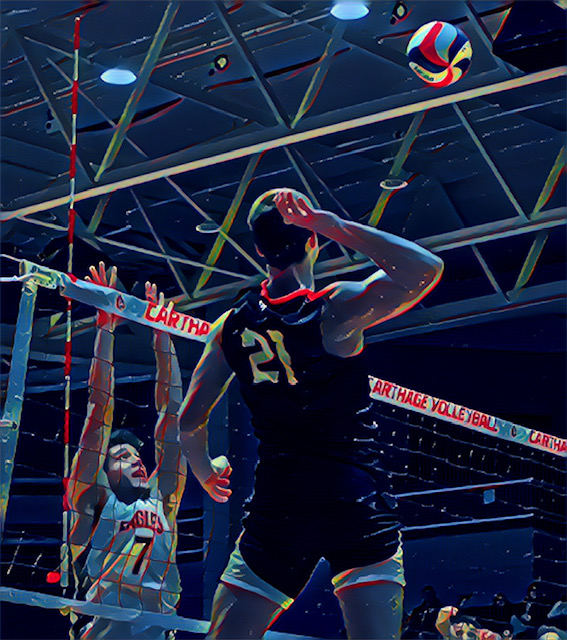
Some stories in sports transcend statistics and championships. They reveal character, resilience, and the true measure of an athlete when faced with their darkest moment. Owen Otto’s junior season at Carthage College was supposed to be his coronation, a year where the 6-3 outside hitter from Hartford, Wisconsin, would lead the Firebirds back to a national championship. Instead, it became something far more profound: a testament to grace under pressure and leadership without a jersey.
The numbers from Otto’s first two seasons tell the story of a player destined for greatness. After earning CCIW First-Year Student-Athlete of the Year honors as a freshman with 261 kills and a .324 hitting percentage, Otto elevated his game as a sophomore, posting 344 kills with a .320 attack percentage while playing in all 96 sets and earned top honors as All-American. His 3.58 kills per set ranked among Division III’s elite, and his three CCIW Hitter of the Week awards confirmed what anyone watching Carthage volleyball already knew: Owen Otto was special.

Then, in a split second on a rain-slicked grass court last summer, everything changed.
“I was playing in a grass volleyball tournament this past summer,” Otto recalls, his voice steady as he recounts the moment that would define his junior year. “It was raining lightly so the grass was slippery and I went up to hit a ball and when I landed my foot slipped out and my knee went in.”
The initial uncertainty was agonizing. With doctors’ offices closed for the weekend, Otto and his family had to wait for an MRI to confirm what he already feared. When the results came back, the diagnosis was devastating: a torn ACL and meniscus, injuries that would sideline him for the entire 2025 season.
“When I got the MRI results back I was very disappointed because I knew how long recovery is for an ACL,” Otto admits. “It’s been frustrating because I know the potential the team has this year to be as strong, if not stronger than last year.”
For most 20-year-old athletes accustomed to excellence, such news could trigger anger, depression, or withdrawal. But Otto’s response reveals the depth of character that makes him more than just an elite volleyball player. It shows why he’s exactly the kind of role model young athletes need.
A Different Kind of Strength
The early weeks were brutal. The torn meniscus meant Otto couldn’t bear weight on his leg for the first month, forcing him to navigate campus and life on crutches while watching his teammates prepare for a championship run without him.
“I had to crutch everywhere for the first month without putting any weight on that leg,” Otto explains. “Once I was able to start walking, recovery has gotten easier because I am making progress in physical therapy, even starting to run and jump. I am working hard to get back fast and stronger.”
That final phrase, “fast and stronger,” captures Otto’s mindset. Rather than dwelling on what he’s lost, he’s focused on what he can gain. Multiple times per week, he grinds through physical therapy sessions. He lifts with his teammates, maintaining his connection to the program even as he battles the mental challenge of watching from the sidelines.

“Mentally the recovery hasn’t been too hard but now that we are in season it’s getting tougher because all I want to do is be out on the floor with my friends and teammates,” Otto acknowledges, offering a glimpse into the emotional toll that comes with forced separation from the sport and people you love.
The word “friends” is telling. For Otto, this isn’t just about missing volleyball. It’s about missing the daily battles alongside his brothers. It’s about watching opportunities slip away while you’re powerless to help.
The Power of Community
If there’s a silver lining in Otto’s injury journey, it’s the reminder of what makes Carthage volleyball special. The program that welcomed him as a freshman and trusted him with major responsibilities as a sophomore has wrapped its arms around him during his greatest challenge.
“I have been looking at the future since I can’t change what has happened,” Otto says with remarkable maturity. “I just have to keep working to come back stronger than before I got hurt. The most supportive people have been my family, friends, teammates, and coaches. Just all the support that I have gotten through this has been greatly appreciated.”
Head Coach JW Kieckhefer, who recognized Otto’s potential from day one, has been instrumental in his development both on and off the court. Even now, injured and unable to contribute on game day, Otto credits his coach for shaping who he is becoming.
“Coach JW has helped me expand my role on the court and come out of my shell as a person,” Otto reflects. It’s a relationship built on trust, the kind of trust that allows a freshman to believe in himself during crucial moments, and the kind that sustains an injured junior through the darkest days of rehab.
Kieckhefer’s impact on Otto’s development mirrors his broader influence on Division III volleyball. Since arriving at Carthage in July 2019, the Wisconsin native has built one of the most dominant programs in the country, winning back-to-back NCAA National Championships in 2021 and 2022. He’s earned United States Marine Corps/AVCA Division III Men’s National Coach of the Year honors and this season claimed his fourth CCIW Coach of the Year award while surpassing 100 career victories at Carthage.
But it’s Kieckhefer’s ability to develop players as people that sets him apart. When asked about Otto earlier this season, the coach didn’t focus on statistics or accolades. “Owen Otto is one of the best players I have ever been around,” Kieckhefer said. “His ability to be a creative point scorer in difficult situations is elite. He makes our offense go and gives our setters a security blanket they can rely on. He is a complete player. I am lucky to coach this team, but also incredibly lucky to mentor Owen Otto.”
That word, “mentor,” captures the essence of Kieckhefer’s philosophy. He’s not just developing volleyball players. He’s shaping young men who will carry the lessons learned at Carthage into every aspect of their lives. Otto’s response to injury is proof that this mentorship runs deeper than X’s and O’s.
The team culture at Carthage runs deeper than wins and losses. Otto describes an environment where love transcends the competitive arena, where seniors welcomed him with open arms as a freshman, and where he’s developed bonds with younger players that will outlast his playing career.
“The amount of love everyone in this program has for each other both on and off the court is so cool to be a part of,” Otto says. “The seniors my freshman year were so welcoming and supportive. I also got close with the freshman my sophomore year and the support I get from them is amazing also.”

The Mental Game
When you ask Owen Otto what improved most between his freshman and sophomore seasons, his answer might surprise those who only look at box scores. It wasn’t his vertical jump, his arm swing mechanics, or his court vision.
“I would have to say the mental part of my game has grown the most,” Otto explains. “Just being confident in myself when I’m playing makes such a huge impact for me, and it helps my team have confidence in me as well. Coach JW has helped build my confidence by trusting me in big moments.”
That mental growth, cultivated over two seasons of high-pressure Division III volleyball, is now being tested in ways Otto never imagined. Confidence built through successful attacks and crucial serves must now sustain him through grueling rehab sessions with no immediate payoff. Trust developed on the court must carry him through months of watching his teammates compete without him.
So far, Otto is passing the test with honors.
“My goals are to come back stronger and to be confident in my knee,” he states matter-of-factly. “I am not targeting a specific timeline, I am just trusting my physical therapist to clear me when they think I’m ready.”
This is wisdom beyond his years, the ability to surrender control while maintaining purpose, to trust the process while driving hard toward recovery, to accept the present while planning for the future.
Looking Ahead
Owen Otto isn’t done writing his Carthage volleyball story. He’s planning to take a fifth year of eligibility, giving him two more seasons to chase the championships that have eluded the Firebirds during his tenure.
“I plan to take a fifth year and I hope to help Carthage take home multiple national championships,” Otto says with the quiet confidence of someone who has already overcome more than most athletes his age will ever face. “My injury has made me realize to not take things for granted, and to give it your all when you are healthy and have the opportunity to play volleyball.”
It’s a lesson that could only be learned through adversity, the understanding that every practice, every match, every moment on the court is a gift that can be taken away in an instant. Otto won’t forget that lesson when he returns to the court.
When he looks at what it will take for Carthage to win that elusive national championship, Otto’s perspective is shaped by both his success and his setback.
“What I think it will take for us to win another championship is confidence and trust in one another,” he explains. “I know we have the talent in every position to win, we just have to be one on the court and trust each other.”
Confidence. Trust. Unity. These aren’t just volleyball concepts. They’re life principles that Otto is living out every day in his recovery journey.
A Legacy Being Written
Most college volleyball players don’t think about their legacy until their playing days are done. Otto is different. Even as he grinds through rehab, he’s thinking about what he wants his Carthage career to mean.
“What I want to be remembered for is of course winning championships,” he begins, acknowledging the competitive fire that still burns. “Another way I want to be remembered is for my play. I want people to think of Carthage and think of creativity and playing the game differently than just out jumping people. I want to be known as an all around good player. Not just an attacker but a great passer and server.”
It’s an ambitious vision, a player who changes how the game is played, who values craft and skill over pure athleticism. His sophomore season statistics support this aspiration: 163 digs and 46 assists alongside those 344 kills, demonstrating the all-around game Otto wants to perfect.
But there’s something Otto values even more than championships and highlight-reel plays.
“I also want my teammates to remember me as an amazing person and someone they can trust and talk to whenever in the future if they need help or want someone to talk to,” he says, revealing the heart of a young man who understands that relationships outlast trophies.
This is the legacy Otto is building right now, even from the sidelines. Every day he shows up to physical therapy with determination. Every practice he attends to support his teammates. Every moment he chooses positivity over bitterness. These are the building blocks of character that will define who Owen Otto becomes, both as a player and as a person.
An Influence Beyond Kenosha
Otto’s impact during this challenging season reaches far beyond the walls of Tarble Arena. His Carthage teammates see him every day, fighting through rehab with a smile, offering encouragement from the bench, refusing to let his injury diminish his connection to the program. That daily example teaches lessons no practice drill or film session ever could.
For younger players on the Firebirds roster, Otto represents what it means to be a complete teammate. They watch him lift weights alongside them despite being unable to compete. They see him study film and offer insights even though he won’t step on the court. They witness his unwavering support during matches when every fiber of his being wants to be out there competing. These moments of quiet leadership shape the next generation of Carthage volleyball players in ways that will ripple through the program for years to come.
“Both the team culture and coaching staff have helped shape me because of how much they support me,” Otto acknowledges. “If it wasn’t for them I would not have been as successful. The seniors my freshman year were so welcoming and supportive. I also got close with the freshman my sophomore year and the support I get from them is amazing also.”
Now Otto is paying that culture forward, showing the next wave of Firebirds what it means to embrace adversity with grace and maintain your commitment to the team even when you can’t contribute on the stat sheet.
Across the CCIW, coaches and players are watching Otto’s journey with admiration. In a conference known for competitive intensity, where programs like Loras, Augustana, and North Central push Carthage every season, Otto’s response to injury has earned respect that transcends rivalries. Conference opponents who battle the Firebirds on the court recognize in Otto the kind of character that elevates the entire league.
“The culture and the drive to win makes this program so much different than others,” Otto explains when discussing what sets Carthage apart. That culture, exemplified by his response to adversity, raises the standard for every program in the conference.
But Otto’s influence extends even further, reaching volleyball programs across Division III and the entire country. In an era when social media amplifies every triumph and setback, Otto’s story resonates with players who understand that injury can strike anyone at any time. High school recruits see in Otto an example of how a program’s culture can sustain an athlete through the worst moments. College players at programs from coast to coast draw inspiration from his journey, watching a premier player who earned First Team All-CCIW honors choose positivity over bitterness, support over self-pity.
Division III volleyball coaches across the country take note as well. In Otto, they see the kind of young man every program hopes to recruit and develop. When coaches like Kieckhefer succeed in developing players like Otto, it elevates the entire Division III volleyball landscape, proving that the third division produces not just competitive volleyball but exceptional human beings.

Words of Wisdom
For young volleyball players watching Otto’s journey, his advice carries the weight of hard-earned experience.
“Some advice I would give to younger players is to enjoy the journey and trust that the work you put in will pay off,” Otto says. “Trust yourself that you are good enough to do whatever you put your mind to and know that the people around you believe in you.”
These aren’t empty platitudes from someone who hasn’t faced real adversity. These are truths forged in the fire of disappointment, shaped by the support of a community that believes in him, and strengthened by a mental toughness that refuses to quit.
For players in the CCIW watching from opposing benches, Otto represents the best of what conference competition can produce. He’s a reminder that rivalries on the court can coexist with respect for character off it. When these players face their own challenges, whether injury or academic struggles or personal setbacks, Otto’s example will echo in their minds.
And for Division III volleyball players nationwide, many of whom will never meet Otto or set foot in Tarble Arena, his story becomes part of their own journey. They see that a torn ACL doesn’t have to mean a torn spirit, that forced time away from competition can become an opportunity for growth, and that the measure of an athlete extends far beyond what happens between the lines.
The Road Ahead
As the 2025 season unfolds without him on the court, Owen Otto is learning lessons that will serve him far beyond volleyball. He’s discovering that leadership doesn’t require playing time, that influence isn’t measured in kills, and that character is revealed most clearly in how we respond to setbacks.
His teammates are watching. Young players across the CCIW are watching. Division III volleyball players from coast to coast are watching. And what they’re seeing is a model of resilience, humility, and unwavering commitment to something larger than individual glory.
When Otto returns to the court, and make no mistake, he will return, he’ll bring more than a reconstructed knee. He’ll bring a deeper understanding of what it means to be part of a team, a renewed appreciation for the gift of competition, and a mental toughness forged through adversity.
The championships he dreams of may still come. The all-around game he aspires to perfect may yet be realized. But Owen Otto has already achieved something more important: he’s shown an entire conference, an entire division, and an entire sport what it means to be a true champion, on and off the court.
His junior season didn’t go as planned. But in many ways, it may be the most important year of his volleyball career, the year he learned that greatness isn’t measured solely in kills and wins, but in how we rise when we fall, how we lead when we can’t play, and how we inspire others simply by refusing to give up.
That’s the Owen Otto story. That’s the legacy being written. And that’s why, regardless of what statistics he posts when he returns, he’s already become exactly the kind of hero the CCIW needs, the role model young players deserve, and an inspiration to Division III volleyball players across the country who will face their own moments of adversity and remember the kid from Hartford, Wisconsin, who showed them how to handle it with grace, determination, and an unwavering belief in the power of community and the strength of the human spirit.